
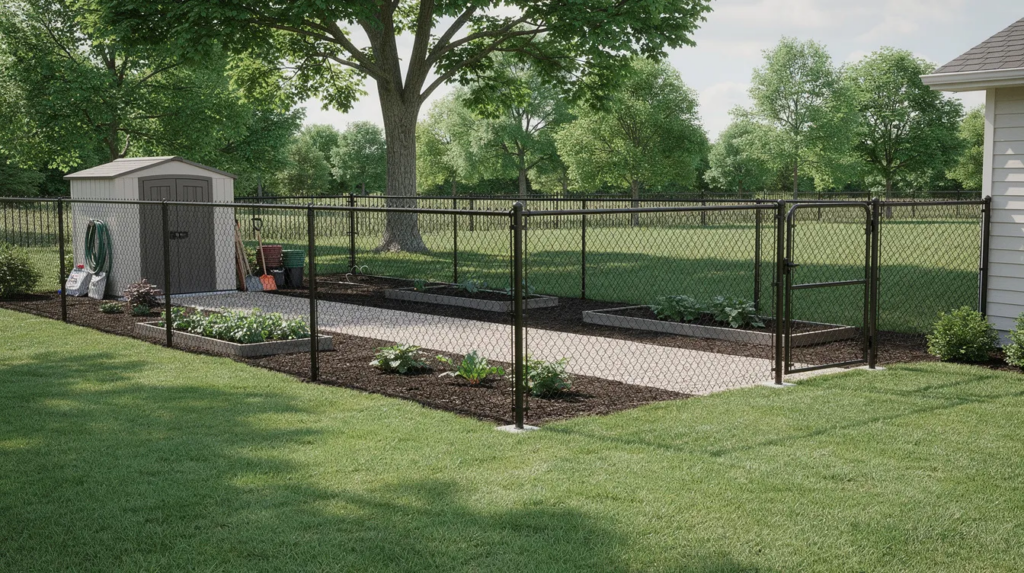
A chain link fence is not usually the fence people save on Pinterest. It is not warm like cedar. It does not hide the yard like vinyl. Nobody stands in the driveway and says, “That mesh is beautiful.” But chain link works. That is the point.
It keeps dogs in. It marks the property line. It protects a side yard, garden area, storage corner for tools or a yard cart, or a long backyard run without turning the whole project into a huge bill. So before writing it off, it is worth looking at chain link fence cost in a practical way. Not just the price of the roll. The full job.
What Chain Link Is Good For
Chain link is useful when the fence needs to be strong, visible, affordable, and functional. It is common around:
- dog runs;
- utility spaces;
- back property lines;
- rental properties;
- garden or storage areas;
- wide yards where a full wood fence would cost much more.
A black chain link fence usually looks better than plain galvanized mesh. It disappears more easily into grass, shrubs, and darker trees. From a distance, it does not shout “metal fence” the same way silver chain link can.
That said, it is still chain link. It will not give the same finished look as cedar, ornamental iron, or steel panels near the front of the house. For the backyard, though, especially where function matters more than style, it can be a good choice.
What Changes Chain Link Fence Price: Height, Finish, and Metal Posts?
The first thing is height. A taller fence is going to cost more because it takes more than just extra mesh. It usually needs more material, stronger posts, and additional labor. A 6-foot fence will almost always cost more than a shorter fence.
Here is where chain link fence cost usually starts to move:
|
Cost factor |
What changes |
Typical impact |
|
Fence height |
More mesh, taller posts, more labor |
Material costs may rise by 20–25% per added foot |
|
Wire gauge |
Thicker wire uses more metal |
9-gauge wire can cost 15–30% more than 11.5-gauge wire |
|
Coating |
Galvanized, vinyl-coated, or powder-coated finish |
Vinyl-coated options can cost 40–60% more than galvanized |
|
Metal posts |
Line, corner, terminal, and gate posts |
Often about $15–$30 per post |
|
Walk gates |
Hardware, alignment, support, and installation |
Can add significant cost to the total project |
Wire thickness matters as well. Thicker mesh costs more because it uses more metal, but it also adds strength. A heavier gauge can make sense for pets, security, or any fence that needs to stand up to more wear, and heavier gauge materials may reduce long-term maintenance costs. Lighter mesh may keep the initial price down, but it can feel weaker later.
Then there is the finish. Basic galvanized steel is usually the most budget-friendly coating option, with galvanized chain link often priced at $5–$8 per linear foot. Vinyl-coated fencing or powder coating costs more, but it looks more finished and can help protect the metal from rust. That is one reason black chain link fencing tends to cost more than standard silver chain link.
So yes, chain link fence cost can look simple at first. Then the site starts adding details.
Why Chain Link Fence Installation Labor Can Change the Whole Project
Materials are only part of the price. Labor costs can shift a lot depending on the ground, access, layout, and size of the property.
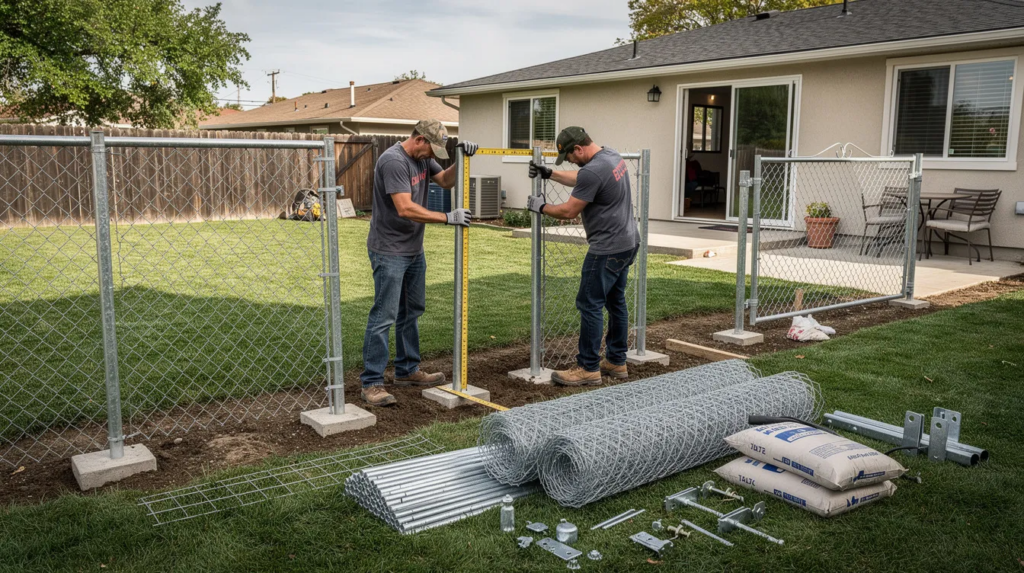
A straight run on flat ground is one thing. A sloped yard with roots, rocks, tight corners, and old fencing to remove is another. Installation can take longer when the crew has to:
- dig post holes;
- install posts in concrete;
- stretch the mesh tightly;
- remove old fencing;
- adjust the gate so it opens and closes properly.
Most professional chain link fence installation is priced by the linear foot. Labor often ranges from $5–$15 per linear foot, while professional installation commonly falls around $10–$40 per linear foot overall. That makes careful measuring important. A low guess can make the project seem more affordable at first, but the final cost may tell a different story.
Permits may be needed too, depending on the fence height and local requirements in the city, county, or country where the property is located. In some areas, fencing permits may be required for structures over 8 feet tall, and permit fees typically range from $50–$200. It is not the fun part, but it is much better to check before work begins, especially if the project is planned for spring or summer.
When Chain Link Beats Wood or Vinyl
Wood gives more privacy. Vinyl looks cleaner. But both can cost more, especially on long runs. Chain link makes sense when the goal is security, pet control, and a clear boundary without closing off the whole yard. It can provide enough separation for everyday use while keeping air and light moving. It does not make a small backyard feel boxed in. It also works well when neighbors’ views do not need to be fully blocked.
For an affordable backyard fence, that is a real advantage. The fence may not be the main design feature, but it does its job. A simple cost snapshot may look like this:
|
Project item |
Typical range |
|
DIY materials |
$3–$15 per linear foot |
|
Galvanized chain link |
$5–$8 per linear foot |
|
Labor |
$5–$15 per linear foot |
|
Professional installation overall |
$10–$40 per linear foot |
|
Typical 150-foot installed fence |
$1,500–$6,000 |
|
Permit costs, where required |
$50–$200 |
There are limits. Chain link is probably not the best fit when:
- the seating area needs full privacy;
- curb appeal is the main goal;
- the fence sits close to the front of the house;
- the design needs to feel warm, solid, or decorative.
But for a dog run, side yard, rear property line, or practical space, chain link can be the smarter material.
The Best Choice Depends on the Site
Before choosing, look at the whole property as the first step. How many linear feet of fencing are needed? Is the ground level? Are there gates, corners, slopes, or old posts to remove? Does the fence need black coating, heavier mesh, or extra height? Those details affect the overall costs more than most homeowners expect, so it is better to order estimates only when the site details are ready.
That is why it helps to compare materials first, then talk with fence contractors who match materials to local conditions. A good contractor should look at the yard, provide a complete view of the project, and explain what the fence needs before giving a quick number. Before asking for an estimate, it helps to have these details ready:
- approximate linear feet;
- preferred fence height;
- number of gates;
- coating preference;
- old fence removal needs;
- slopes, roots, rocks, or tight access points.
A chain link fence is not the prettiest option. Fine. It does not have to be. If the price, materials, and installation fit the job, it can be one of the most useful fences a backyard can have. Its sustainability depends less on looks and more on choosing the right finish, post setup, and maintenance plan for the site.