
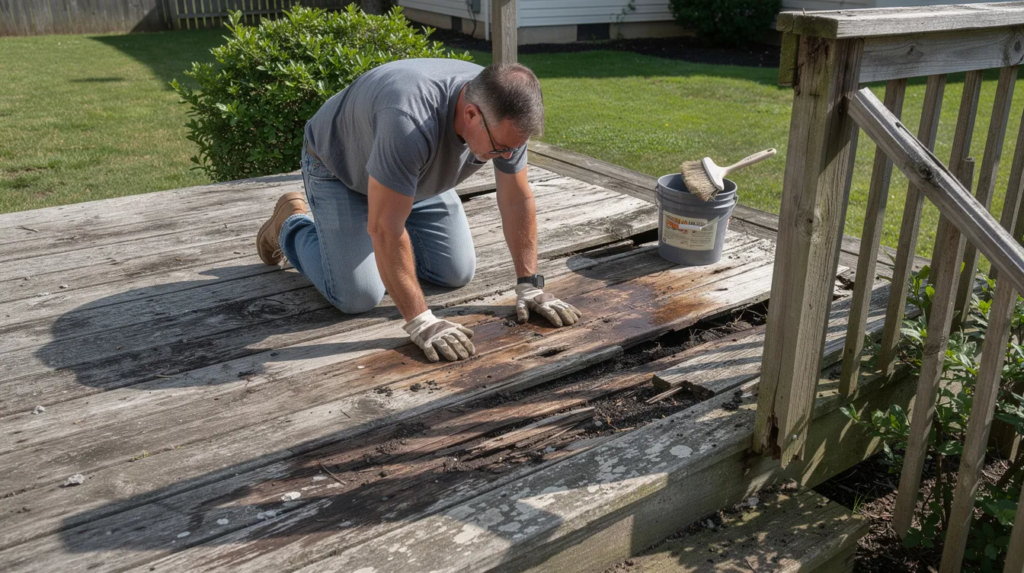
Not ideal. But not always a disaster. The real question is what happens when you walk on it. Does the deck feel firm, or does one spot sink a little? Do the boards only look worn, or do they feel wet and soft? That is where basic deck maintenance tips turn into a real inspection.
Clean First, Then Judge the Wood Deck
Start with cleaning. A dirty deck is hard to read. Sweep the deck surface well. Clear leaves, dust, and debris from the gaps before they accumulate. Deck boards should usually be spaced at least ¼ inch apart to reduce debris buildup and help water move through.
Pay closer attention to the places where moisture usually hides:
- corners where furniture stays in the same position;
- gaps packed with leaves, dirt, or old debris;
- shaded areas near trees, shrubs, or tall plants;
- spots near stairs, posts, and railings;
- boards that stay damp longer than the rest of the deck.
Trim surrounding vegetation where it blocks airflow or keeps the deck shaded for too long. Those damp areas can become a problem if moisture stays trapped for too long. Mold, mildew, algae growth, and rot are more likely on a wood deck that already deals with rain, shade, and changing weather.
For everyday cleaning, there is no need to make it complicated. Mild soap, water, and a soft brush usually work well. In humid New Jersey conditions, cleaners made to combat mold and mildew can also help when growth keeps returning. Pressure washing can help with stubborn grime, but use it carefully. A power washer should usually be kept at or below 1,500 psi for rinsing. Too much pressure from a pressure washer can rough up the wood, damage the grain, and leave spray marks across the surface. Use it carefully, more like a rinse than a stripping tool, and avoid cleaning in direct sunlight so the surface does not dry too fast.
After the deck dries, look again. Faded stain, old paint, light cracking, or surface wear may only mean normal deck maintenance. Cleaning, sanding, sealing, and fresh stain can still restore a lot when the process is done carefully. Soft boards are different. So are boards that move, split deeply, or no longer hold nails. Those issues can occur when moisture has already moved deeper than the surface.
Check Under the Deck Boards Before Adding Joist Tape
Resurfacing only works when the frame is still sound. That is the part people sometimes skip because new boards feel like the obvious fix.
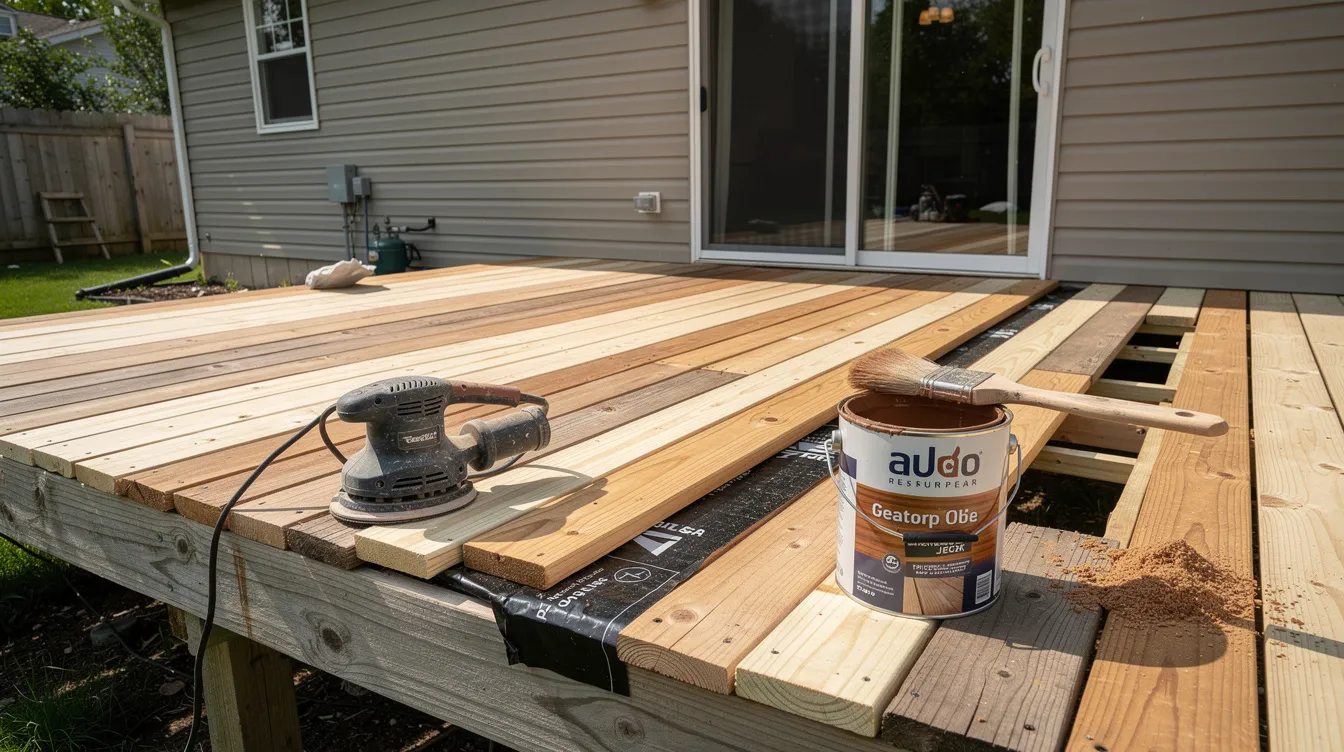
Look under the deck boards where access allows. Check the joist areas for dark wood, soft spots, loose bolts, rusted nails, corrosion, and moisture that seems to sit instead of drain, especially near stairs, posts, or a concrete patio edge. Deck joist tape can protect joists from water during resurfacing or a new build. It is useful protection, but it is not a cure for rot.
The railing deserves the same attention. If it moves at the post base or feels loose near the stairs, that is not just cosmetic. It is a safety issue.
Before buying materials, it is worth speaking with experienced deck builders before committing to new boards. Fresh boards can make an old frame look better for a while, but they cannot bring back structural integrity if the joist system is failing.
How to Protect a Deck From Weather and Remove Snow Safely
Deck damage usually builds slowly. Sun dries the surface. Warm weather brings humidity. Leaves sit in corners. Snow and ice stay too long. Over time, water finds every weak spot.
For a wood deck, regular cleaning should happen at least once a year, often in spring before heavier use starts. It also helps to build the year around a few simple habits:
- inspect the deck at the beginning of each season;
- clean leaves and debris before moisture gets trapped;
- seal the wood when the surface is dry and ready;
- check shaded corners after long humid stretches;
- remove snow before it sits on the boards for too long.
Sealing every two years is also one of the better maintenance practices, although timing can vary depending on local weather conditions, shade, traffic, and the age of the boards. A good sealant should stand up to water and UV exposure. More importantly, it should penetrate the wood instead of sitting on top as a weak coating that may start peeling after one season.
A quality stain can help cover uneven fading, protect the boards after sanding, and enhance the color without hiding the wood completely. Dark colors may look sharp, but they can hold more heat in direct sun. Some homeowners also consider penetrating oil finishes for a more natural look. With treated lumber, timing matters. The wood needs to dry properly before sealant goes on, and new pressure-treated wood often needs extra drying time before it is ready.
Composite decking takes less work, but it still needs care. Different decking products can have different cleaning rules, so manufacturer guidance should come before guesswork or aggressive cleaning. Mild soap and a soft brush are usually enough to maintain the surface. Rubber-backed mats, harsh cleaners, and products the manufacturer warns against can cause problems, so they are better avoided.
Winter should not be ignored either. Snow removal should happen before it sits on the deck for an extended period. A plastic shovel is safer than a sharp metal one. Rock salt can be rough on finishes and hardware. Calcium chloride is often a gentler choice, but the deck material guidelines should come first.
When Deck Stain and Resurfacing Make Sense
Resurfacing may be a good choice when the frame is firm and most of the damage is limited to the deck boards. A few repairs are normal. Replacing damaged boards, adding fresh joist tape, improving spacing, tightening hardware, and applying new stain can create a cleaner surface and give the deck more useful years. It also helps if the layout still works: same porch connection, same stairs, same size, no major sagging, and no repeated soft spots.
This quick check can make the resurfacing decision easier:
|
What to Check |
Resurfacing May Still Make Sense |
Rebuild Warning Sign |
|
Deck age |
Around 10–15 years, if the frame is still solid |
Older deck with repeated structural repairs |
|
Board spacing |
Gaps allow water and debris to move through |
Gaps are packed tight, trapping moisture |
|
Cleaning method |
Gentle washing, soft brush, or low-pressure rinsing works |
High-pressure washing exposes soft wood or deeper damage |
|
Treated lumber |
Boards are dry enough before stain or sealant |
New pressure-treated wood is sealed too early |
|
Winter care |
Snow is removed with a plastic shovel or broom |
Snow, ice, and salt sit long enough to affect hardware or finishes |
When Rebuilding Is the Better Call
A full rebuild is safer when the deck moves, bounces, sags, or shows rot in several areas. Loose railing posts, failing joist sections, serious corrosion, and boards that no longer hold nails are warning signs. So clean it first. Then inspect it without wishful thinking.
If the bones are good, resurfacing can make sense. If the frame is failing, new boards are only decoration over a bigger problem.