
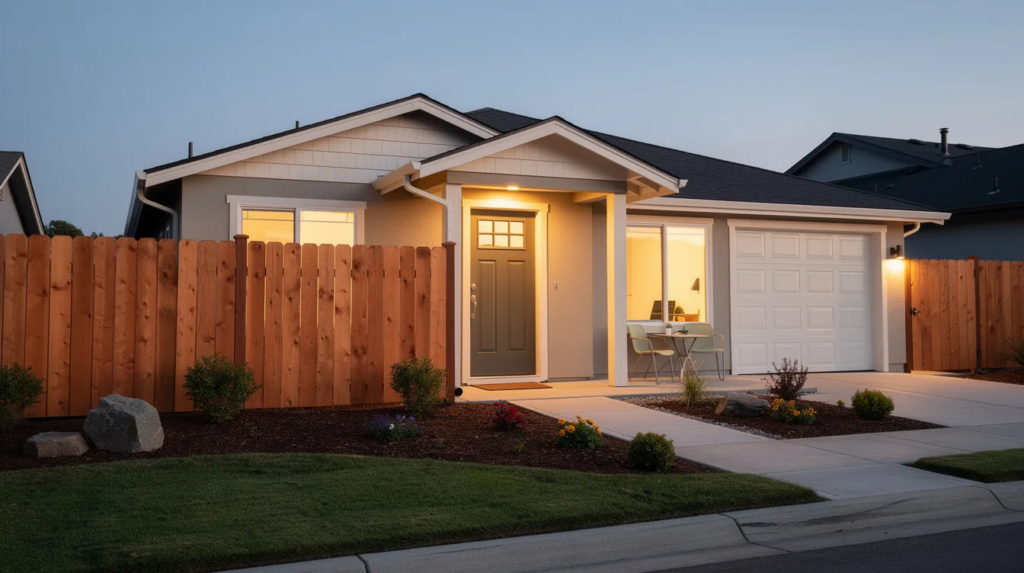
Choosing a fence material sounds easy, and even a little fun, until you picture it beside the actual house. Not the dream photo saved for inspiration. The real house. The roof, front door, windows, porch, driveway, grass, trees, patio, brick, concrete paths, and landscaping already there.
That is why curb appeal improvements should not start with “wood or vinyl?” The first thing to check is the yard itself. Maybe the backyard feels too exposed. Maybe one side needs privacy. Maybe the old front door got a fresh coat of paint, the new windows improved the exterior, but the fence still makes the property feel unfinished.
A fence is not just a boundary. It shapes the first impression from the curb. If it fits, the home’s appearance feels more complete. If it does not, even an expensive outdoor project can look like the wrong idea. Homes with nice landscaping sell for 2% more on average, which is why the fence, planting, lighting, and entry details should work together instead of competing for attention.
Look at the New Front Door and New Windows Before Choosing the Fence
Some homes need warmth. Others need clean lines. A cedar fence can look natural beside brick, shrubs, and Pacific Northwest native plants that handle shady, damp environments well. Evergreen plants are also useful for winter greenery in Seattle, especially when the fence needs to look intentional outside the warmer months. A black metal fence may suit a modern house with sharp windows and a simple porch. A tall white vinyl fence can work in one yard and look too bright in another.
Quick curb appeal facts:
|
Outdoor improvement |
What the numbers suggest |
|
Nice landscaping |
Homes sell for 2% more on average |
|
Outdoor lighting |
Homes sold for 1.2% more |
|
New front door |
Up to 188% ROI |
|
Wood deck |
Average ROI of 83% |
The goal is not to match every feature. It is to complement the home’s exterior. The fence should make sense with the existing door, roof color, windows, awning, lighting, and landscaping.
This matters if prospective buyers are part of the plan. Buyers often judge the curb before they notice smaller details, especially in a competitive market where the exterior can shape their first reaction. A house can feel cared for before the door even opens. A neat fence, warm lighting, clean concrete, healthy plants, and a strong new front door all help create that impression. The front door is especially worth considering because it can offer an 188% return on investment while changing the whole entry.
Wood Looks Natural in the Outdoor Space, But It Needs Maintenance
Wood is still popular because it gives a backyard a warmer, more lived-in feel. It fits well with a deck, pavers, a pergola, a shaded corner, or a patio where the family spends summer evenings. It also offers privacy without turning the outdoor space into a box, especially as outdoor kitchens become more common and backyards are expected to do more than before.
Wood usually works best when the yard needs one of these things:
- more privacy without a cold, closed-off look;
- a natural material beside plants, brick, stone, or decking;
- a softer backdrop for patios, pergolas, and seating areas;
- a fence style that feels finished from both sides.
Cedar is often a strong option for outdoor home upgrades because it has natural rot resistance. Adding a wood deck has an average ROI of 83%, which helps explain why wood remains common in home improvement projects.
|
Wood fence style |
Best use |
|
Full panel fence |
Blocking views and creating stronger privacy |
|
Horizontal wood fence |
Giving the yard a cleaner, more modern look |
|
Good-neighbor fence |
Keeping both sides of the fence visually finished |
But wood needs maintenance. Seattle’s damp climate promotes moss and mildew buildup on surfaces, and rain, winter weather, damp ground, direct sun, and fallen leaves all wear wood down. That is why moisture-resistant materials matter for home improvements in Seattle. Plants too close to the boards hold moisture. One side may stay wet longer in spring. So yes, wood can be a smart investment, but homeowners should prepare for cleaning, staining, and repairs over time.
Vinyl Is Easy, But Not Always Right
Vinyl is appealing because it does not need paint or stain. It can work well around a pool, side yard, or backyard where privacy is the main idea. It is also easy to wash, which helps when the goal is low maintenance.
Still, vinyl has to fit the site. Around a simple newer house, it may look clean. Around older brick, large trees, darker trim, and layered landscaping, it can look too sharp unless the design is chosen carefully. Routine washing can also matter because pressure washing removes dirt and grime from hard surfaces and helps keep exterior areas from looking neglected.
Cost also depends on more than the straight fence line. Gates, slopes, concrete edges, tight corners, and access can add more money to the home improvement project, especially when the design has to accommodate pets, privacy, or awkward yard conditions. If the plan is to replace an old fence, those details matter before building starts.
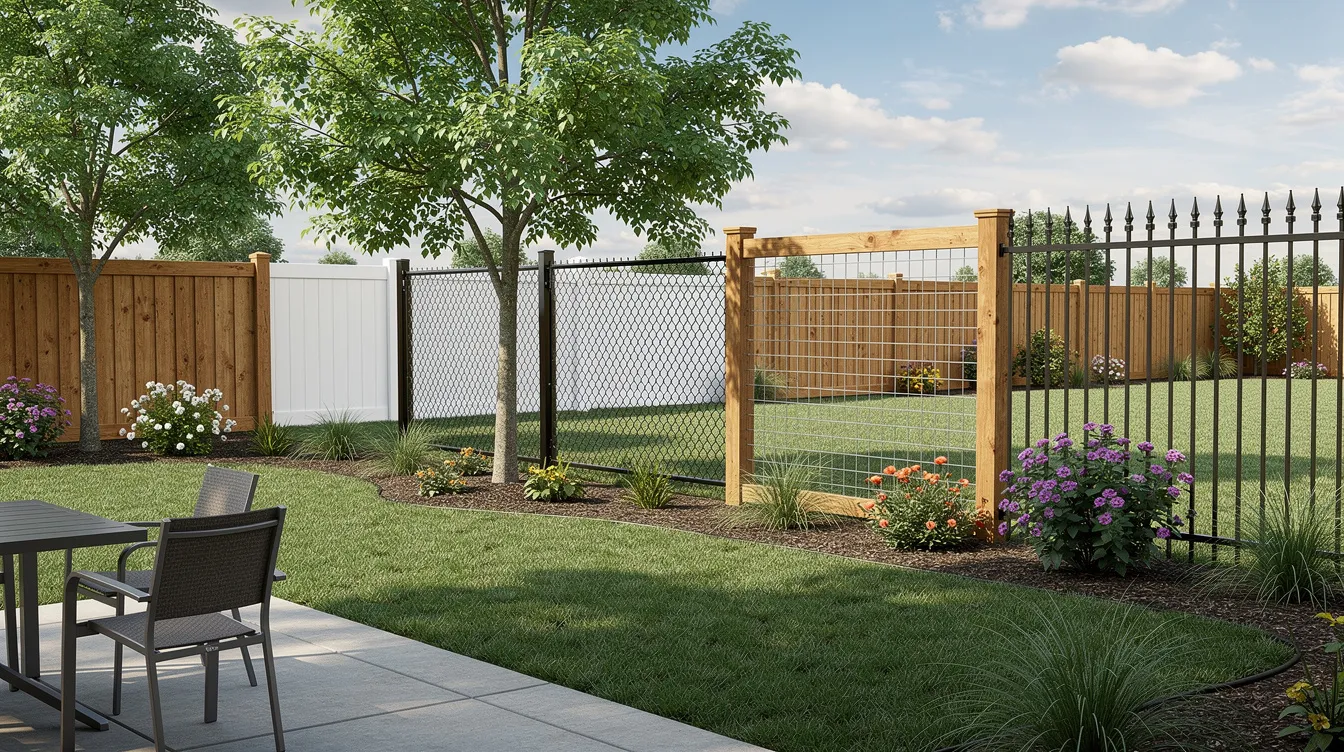
Chain Link, Metal, and Hog Wire Have Their Place
Chain link is not the most exciting choice for curb appeal, but it solves real problems. It works for pets, long yard lines, utility areas, and spaces where visibility matters. Black-coated chain link blends better with shrubs, trees, and darker landscaping than plain metal.
Metal, hog wire, and ornamental iron work best when the yard needs structure without losing the view. Hog wire can fit gardens and casual backyard layouts. Iron can look finished near a porch, driveway, or front walk. Steel panels can make a modern exterior feel more intentional.
Too much metal can feel harsh. Used in the right corner, it adds shape and keeps the space open. A simple material comparison can make the choice easier:
|
Fence material |
Best fit |
What to watch |
|
Wood or cedar |
Warm backyards, decks, patios, privacy areas |
Needs cleaning, staining, and repairs over time |
|
Vinyl |
Pools, side yards, low-maintenance privacy |
Can look too bright if the house has older brick or dark trim |
|
Chain link |
Pets, long yard lines, utility areas |
Works better for function than strong curb appeal |
|
Hog wire |
Gardens, casual backyard layouts, open views |
Offers structure but not full privacy |
|
Ornamental iron or metal |
Front walks, driveways, modern exteriors |
Too much metal can feel harsh |
Let the Yard Decide
The best fence material is the one that fits real life. Before choosing, homeowners should ask a few practical questions:
- Is the ground often wet?
- Are there large trees near the fence line?
- Does the backyard need privacy for entertaining?
- Will the fence need to contain pets?
- Is the main goal security, resale value, or curb appeal?
Good landscaping can add value, and layered landscaping helps keep visual interest year-round. But nobody needs a perfect green thumb to make the fence work. Clean shrubs, healthy plants, refreshed mulch, and low-voltage LED lighting can help outdoor spaces feel safer and more finished at night, especially during dark winter evenings. Homes with outdoor lighting sold for 1.2% more, so lighting can support curb appeal without turning the yard into a major renovation.
Many homeowners compare options first, then talk with fence contractors who match materials to local conditions before building.
A good fence should help the curb, improve the outdoor space, and stand up without becoming another weekend chore. That is when it feels less like a separate project and more like something the house needed all along.