
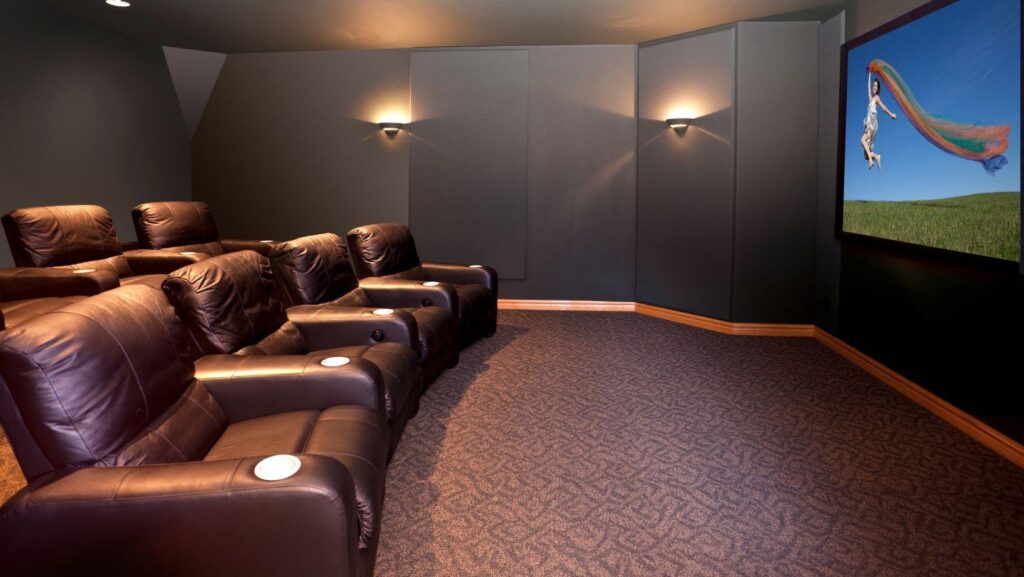
Build an entertainment room too closely around the equipment you own now and it can age surprisingly fast.
The television gets replaced. The new console is a different shape. A streaming box disappears because the next TV already does the job. Suddenly that custom cabinet has three empty shelves and a cable hole six inches from where you need it.
The bits worth getting right during a renovation are usually the ones you won't want to touch again: wiring, power, ventilation and the bones of the room.
Give the cables somewhere to go
If the walls are open, run more cable than you currently need. Leave conduit or another accessible route so a cable can be replaced later. You don't have to predict which connector will be standard five years from now. You just need to avoid cutting open a freshly painted wall when it changes.
Think about the obvious routes first. TV position, possible projector location, network connection, speakers if you're wiring them in.
And label everything.
Six identical cables disappearing into a cupboard make perfect sense on installation day. Three years later, nobody remembers which one goes where.
Don't build around one television
Displays change too quickly for that.
A recess cut to the exact dimensions of today's TV may look neat, but the next screen might be wider, thicker or have connections in completely different places.
Leave some room around mounting points. The same goes for projector shelves and media cabinets.
Modular furniture is useful here. A low unit that can be moved or replaced gives you more options than permanent cabinetry designed around one receiver, one console and one exact stack of equipment.
I've seen lovely entertainment units become expensive storage furniture because the technology inside them moved on.
Add the sockets while it is easy
Entertainment rooms have a habit of collecting plugs.
The main screen is only the start. Speakers, consoles, network gear, chargers, lamps and whatever gets added next all need power somewhere.
Extra outlets behind the TV and around likely equipment positions are cheap during the renovation. They are much less fun to add afterwards.
Think about the sofa too. Powered recliners, a floor lamp or a charger may end up there later.
Nobody admires a well-placed electrical outlet.
They do notice the extension lead running across the skirting board.
Hidden equipment still needs air
Closed cabinets are great for hiding boxes and cables – but they’re also good at trapping heat. And electronics are good at generating it.
If you plan on putting many devices in a cupboard or rack, leave enough space around them and somewhere for the warm air to escape.
Access matters just as much. A receiver can be beautifully hidden until one HDMI cable needs replacing and half the furniture has to come apart.
That gets old quickly.
Treat networking like part of the room
Streaming has made the network part of the entertainment setup whether we like it or not.
A large screen and good speakers don't help much if the connection struggles whenever two people are online at once.
Run Ethernet to fixed equipment where practical. It is also worth planning cable routes for wireless access points rather than assuming the router at the other end of the house will handle everything forever.
The room may be doing several jobs at once. One person could have a film on the main screen while someone else uses a console or opens yyycasino on a laptop.
You don't need to design a permanent corner for every possible service. You do want enough network capacity that nobody has to ask who is downloading something.
Mind the lighting
Lighting is where you can get carried away. But think before you decide where you put the bulbs.
A dramatic home cinema can look great in photographs. But you won’t always watch movies. You might be gaming, reading something on a tablet (or from a book), or trying to find the remote that somehow disappeared between two cushions again.
Separate lighting zones give you more freedom. So do sensible power points and controls that can take different fittings later.
The LEDs themselves can change.
The wiring behind the wall is the bit you want to get right.
Leave some empty space
This may be the least exciting renovation advice in the article.
Don't fill everything.
An empty wall section or a bit of open floor space gives the room somewhere to go later. A desk might appear. Two gaming monitors could replace one television. Someone may want enough room for VR. The sofa may end up facing another direction entirely.
Permanent furniture makes every one of those changes harder.
A good entertainment room doesn't need to predict the next five years of consumer electronics. It just needs enough spare capacity to cope when your plans change.
The television will probably go first.