
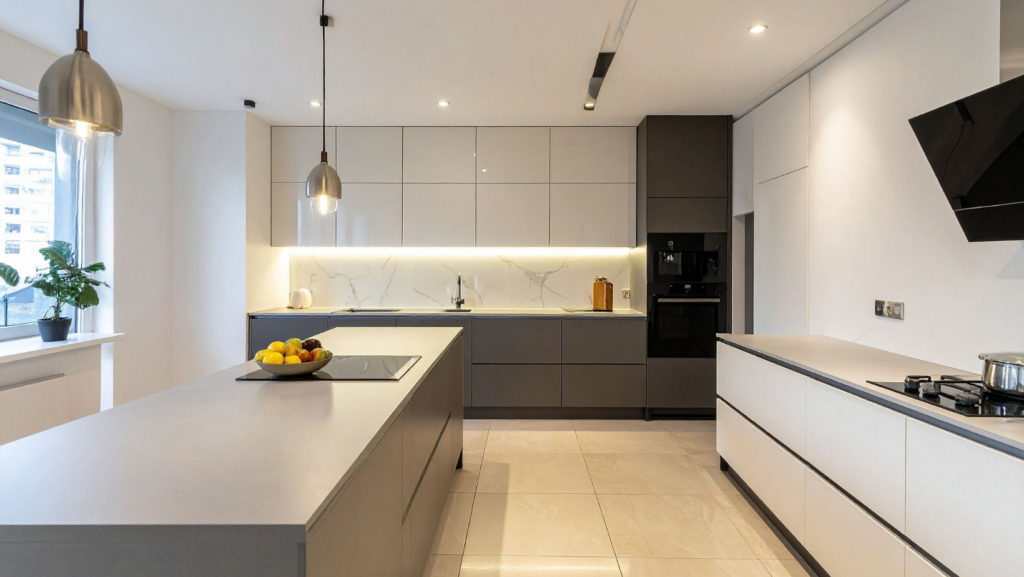
Key Takeaways
- Kitchen renovation decisions, such as ventilation, electrical upgrades, and installation spacing, can directly affect how long appliances last.
- Tight cabinetry and poor airflow can cause appliances to overheat and wear out faster.
- Updating electrical systems during renovation helps modern appliances operate safely and efficiently.
- Proper leveling and moisture control protect internal components and prevent long-term mechanical strain.
- Designing kitchens with maintenance access allows repairs to be completed more easily and extends appliance lifespan.
Over the years, I’ve noticed that many homeowners planning kitchen renovations in Atlanta focus on one main goal: creating a space that looks modern and inviting. Cabinets, countertops, and lighting often receive most of the attention, while practical details such as appliance placement are sometimes treated as an afterthought.
In my experience observing renovation projects and home upgrades, the design decisions made during a kitchen remodel can directly affect how long appliances last. Small mistakes such as poor ventilation, cramped cabinetry, or outdated electrical systems can quietly reduce the lifespan of refrigerators, dishwashers, and ovens.
This issue frequently appears in fast-growing cities like Atlanta, where many homes are being remodeled to match contemporary kitchen trends. While these renovations can dramatically improve a home’s look, they sometimes overlook the technical requirements that appliances need to operate properly.
Understanding these renovation mistakes can help homeowners protect their appliances and avoid unnecessary repairs later on.
Poor Ventilation Around Kitchen Appliances
One issue I often notice in renovated kitchens is insufficient ventilation around major appliances. Designers often aim for a seamless built-in appearance, but appliances still need adequate space to release heat during operation.
Refrigerators are a good example. In several renovation projects I’ve observed, cabinetry was built tightly around the refrigerator to achieve a flush look. At first glance the design looked excellent, but over time the refrigerator began running constantly. The compressor struggled to maintain temperature because heat had nowhere to escape.
Appliances naturally generate heat during operation. Refrigerators release heat from their compressors, ovens produce high temperatures during cooking, and dishwashers release steam during cleaning cycles. Without proper airflow, trapped heat forces components to work harder and wear out faster. Motors work harder, electronic boards degrade more quickly, and the appliance’s overall efficiency declines.
During a renovation, leaving adequate space around appliances is one of the simplest ways to protect them. Manufacturers typically recommend specific airflow clearances, and following these guidelines can significantly extend the lifespan of appliances.
Cabinets Installed Too Tightly Around Appliances
Another renovation issue I’ve seen repeatedly is cabinetry installed too tightly around appliances. Modern kitchens often feature integrated appliances hidden behind custom panels. While this creates a polished appearance, it can also create long-term challenges.
I once visited a newly renovated kitchen where the dishwasher had been installed so tightly between cabinets that removing it for maintenance would have required dismantling part of the cabinetry. The homeowner had focused heavily on visual symmetry, but accessibility had not been considered during installation.
This design can lead to two major problems. First, tight cabinetry restricts airflow, which can cause overheating. Second, it makes routine maintenance far more complicated than it needs to be.
Appliances are mechanical systems, and eventually they require servicing. When technicians cannot easily remove or access an appliance, repairs take longer and sometimes involve unnecessary structural adjustments.
In my experience, kitchens that balance aesthetics with practical accessibility tend to age much better than those designed purely for visual appeal.
Ignoring Electrical Upgrades During Renovation
While airflow and cabinet spacing affect appliance performance, the kitchen’s electrical infrastructure is equally important.
One lesson I’ve learned from watching renovation projects is that electrical systems are often overlooked. Many homeowners assume that if existing outlets work, the electrical system must be adequate for modern appliances.
However, older homes were not always designed to support today’s appliance demands.
Modern kitchens often include multiple high-powered devices running simultaneously. Refrigerators, induction cooktops, ovens, dishwashers, and microwaves all draw significant power. When these appliances share outdated circuits, electrical strain can build up over time.
I’ve seen situations where appliances began experiencing intermittent issues, such as unexpected resets, inconsistent performance, or control panel malfunctions. These problems were eventually traced back to electrical capacity limitations.
A kitchen renovation is the best time to evaluate the home’s electrical system. Updating circuits, improving grounding, and ensuring sufficient power capacity can prevent many appliance problems before they occur.
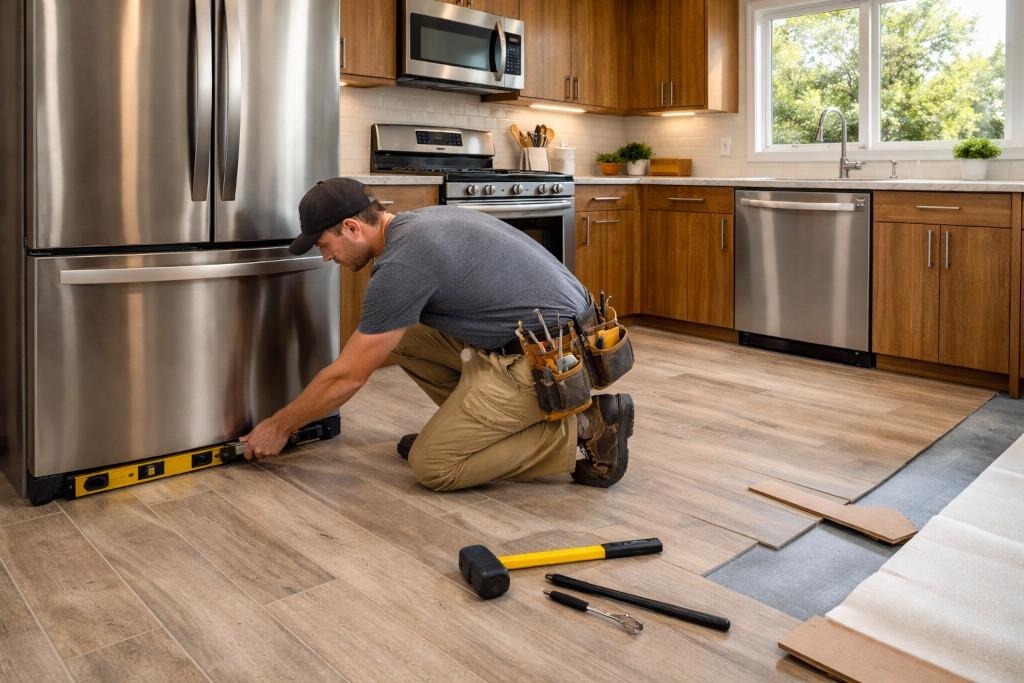
Improper Appliance Leveling After Flooring Installation
Flooring upgrades are almost always part of a kitchen renovation. New tile, hardwood, or luxury vinyl flooring can dramatically change the appearance of the space.
However, one detail that is often overlooked is properly leveling appliances.
After flooring installation, appliance height and alignment can shift slightly. In several kitchens I observed, refrigerators and dishwashers were reinstalled without adjusting their leveling feet. At first, everything seemed fine, but small issues began to surface over time.
Refrigerator doors didn’t seal perfectly. Dishwashers drained unevenly. In some cases, appliances produced unusual vibrations during operation.
Appliances rely on balanced positioning to function correctly. When they are slightly tilted or uneven, internal components experience additional strain. Over time, this stress can affect performance and durability.
Taking a few minutes to properly level appliances after flooring installation can prevent many of these issues.
Poor Moisture Management in Kitchen Design
Moisture control is another factor often overlooked in kitchen renovation planning.
Kitchens naturally produce humidity from cooking, dishwashing, and general cleaning. Without proper ventilation, this moisture can accumulate around appliances and cabinetry.
I’ve seen kitchens where steam from dishwashers repeatedly condensed inside surrounding cabinets because airflow was limited. Over time, this trapped moisture began affecting nearby wiring and metal components.
Humidity can gradually lead to corrosion and electrical instability. Appliances positioned near sinks or plumbing connections are especially vulnerable to these conditions.
Good ventilation, careful appliance placement, and attention to airflow can reduce moisture buildup and protect appliance components.
Failing to Plan for Appliance Maintenance
Perhaps the most overlooked detail in kitchen renovations is planning access for maintenance.
Every appliance will eventually need servicing. Whether it’s replacing a motor, fixing a control board, or addressing a mechanical issue, technicians need room to access the appliance.
Unfortunately, some kitchens are designed in ways that make servicing unnecessarily difficult.
I’ve seen refrigerators placed inside tightly enclosed cabinetry where removing the unit required dismantling surrounding panels. In another renovation, a built-in washer system had been installed behind fixed cabinetry that could not be removed without structural changes.
Situations like these can turn simple repairs into complicated projects.
When appliances are installed with adequate spacing and accessibility, routine maintenance and repairs become much easier to manage. Most kitchens today include appliances from several well-known brands, such as Whirlpool, Samsung, LG, GE, and Maytag, and each manufacturer uses slightly different components and engineering designs.
Because of these differences, repairs are often faster when handled by technicians who regularly work with a specific brand. For homeowners who use Maytag appliances, reaching out to a specialist in Maytag appliance repair in Atlanta can make the repair process smoother, since technicians familiar with the brand can often identify and resolve issues more quickly.
Planning maintenance during renovation protects both the appliances and the kitchen structure.
Local Insight: Kitchen Renovation Trends in Atlanta
Atlanta homeowners have embraced modern kitchen design in recent years. Open layouts, integrated appliances, and custom cabinetry are especially popular in neighborhoods such as Buckhead, Midtown, and Decatur. When planning these upgrades, many homeowners also prioritize durable countertops, cabinetry, and finishes that can withstand daily use. Understanding why high-quality materials matter for your kitchen renovation can help ensure these upgrades remain functional and attractive for years.
While these designs create impressive spaces, they also require careful planning to ensure functionality.
Atlanta’s warm climate can increase the workload on refrigerators and other appliances that must regulate internal temperatures. When ventilation is limited or appliances are tightly enclosed, this additional strain becomes more noticeable.
From what I’ve observed, the most successful kitchen renovations in Atlanta combine thoughtful design with practical engineering. Kitchens that prioritize airflow, electrical capacity, and accessibility tend to maintain appliance performance much longer.
What I’ve Learned From Watching Kitchen Renovations
After observing many renovation projects, a few consistent lessons stand out.
First, appliance performance depends heavily on proper installation conditions. Even high-quality appliances can struggle when ventilation or spacing is insufficient.
Second, renovation is the ideal moment to fix infrastructure issues. Electrical upgrades, ventilation improvements, and layout adjustments are far easier to implement during remodeling.
Finally, practical design almost always outperforms purely aesthetic design in the long term. Kitchens that account for airflow, maintenance access, and appliance requirements tend to remain functional and reliable for many years.
Frequently Asked Questions
Do kitchen renovations affect appliance lifespan?
Yes. Design decisions such as ventilation spacing, electrical capacity, and installation methods can significantly influence how long appliances last.
Why is ventilation important for appliances?
Ventilation allows heat generated by appliances to dissipate. Without airflow, internal components may overheat and wear out faster.
Should electrical systems be upgraded during renovation?
In many cases, yes. Modern appliances often require more electrical capacity than older kitchens were designed to handle.
Can improper installation damage appliances?
Yes. Tight cabinetry, uneven installation, and poor airflow can place additional strain on appliance components.
Is maintenance access important in kitchen design?
Absolutely. Appliances eventually require servicing, and proper spacing allows technicians to repair them without damaging surrounding cabinetry.
Conclusion
Kitchen renovations in Atlanta provide an excellent opportunity to improve both the appearance and functionality of a home. However, the choices made during remodeling can have long-term effects on appliance performance.
From what I’ve seen, many appliance problems begin with small renovation decisions, such as limited ventilation, tight cabinetry, outdated electrical systems, or installation oversights.
By considering these factors early in the renovation process, homeowners can create kitchens that support both style and durability. When appliances are installed with proper airflow, accessibility, and infrastructure support, they are far more likely to operate efficiently for many years.