
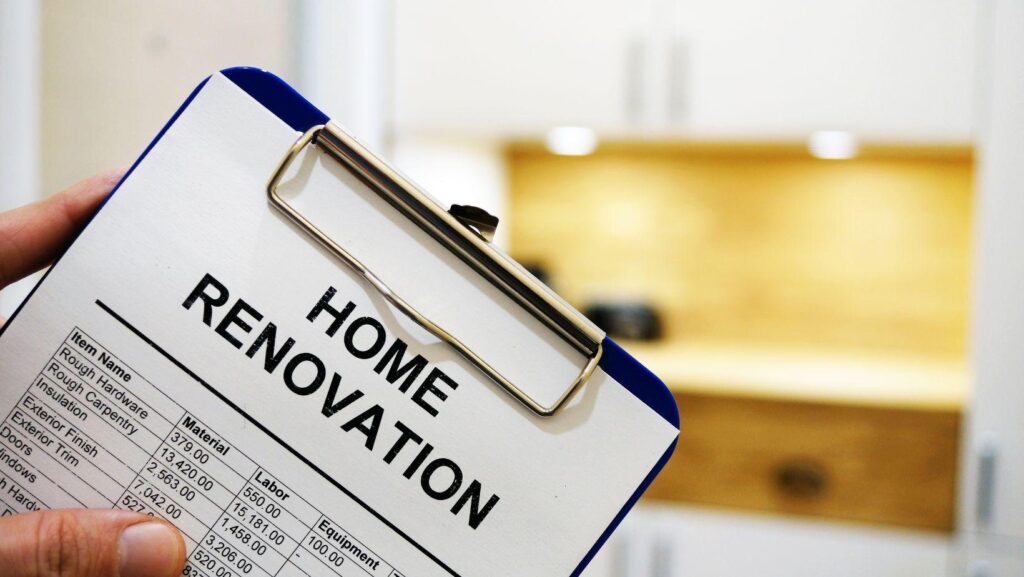
Every renovation starts the same way. There’s a number in a spreadsheet, a folder full of photos, and a wall nobody’s opened yet. Then somebody opens the wall.
Budgets almost never collapse in one big dramatic moment. They erode. A small upgrade here, a “while we’re at it” there, a delivery charge nobody mentioned-and before long the final number doesn’t resemble the one anyone started with. The habit that helps is checking the full cost before committing. Whether you’re ordering kitchen cabinets or planning to buy Litecoin with visa, the advertised amount may not include every fee. Different purchases, same useful budgeting principle: know what will actually leave your account.
Talk to people who’ve been through a renovation overrun and a pattern emerges: it happened to them once, and once was enough.
The good news-and it genuinely is good news-is that the erosion follows patterns. Fuzzy scope. Surprises hiding in the walls. Decisions made in a panic. Timelines built on optimism instead of information. None of that means a homeowner is bad at renovating. It means there were holes in the plan, and holes in a plan can be fixed before the sledgehammer comes out.
First, figure out what’s actually getting done
Write the one-page brief
Scope is the cheapest building material in any renovation. Costs nothing, saves everything. One page really is enough: what’s getting done, why it matters, what “finished” looks like, and the hard limits – budget ceiling, timeline, deal-breakers.
This isn’t paperwork for its own sake. Contractors quote what’s written down, and what’s written down is the only thing that can be compared across bids. Scope creep – the slow drift that turns a bathroom refresh into a second mortgage – starts exactly where the brief ends. That’s not a coincidence.
Needs before wants. Always.
The leaking roof goes first. The electrical panel that’s older than the people living under it goes first. The bathroom floor with the suspicious soft spot goes very first. The pretty stuff waits.
That’s not what anyone wants to hear, but it’s arithmetic, not puritanism. Lay beautiful tile over a plumbing problem and sooner or later somebody gets paid to smash up beautiful tile to reach the plumbing problem. Rework is the most expensive work there is, and it’s not close. (Buyers forgive dated finishes, by the way. They don’t forgive a failing roof under fresh paint.)
The list nobody writes: what isn’t getting done
Here’s a move almost nobody makes, and it’s quietly powerful. Write down what isn’t getting done. The rooms that stay as they are, the upgrades that wait until next year – on paper, now, while everyone is calm. Because it gets tempting later. The walls are open, the crew’s right there, and suddenly the hallway next to the gorgeous new kitchen looks shabby by comparison.
Decisions made early, while they’re still free, are what protect a budget. That’s the whole trick, honestly.
A budget is a list, not a vibe
Line items, please
“Kitchen – $40,000” isn’t a budget. It’s a wish in a spreadsheet. A real budget breaks the job into buckets: labor, materials, permits, design fees, demo, disposal, delivery, equipment rental, the final clean. Every forgotten bucket becomes a surprise later, and the surprises are remarkably consistent. Permits shock people. Disposal shocks people. Delivery fees shock people. None of it is actually shocking – it’s all standard – it just wasn’t on the list. Unlisted is how “minor” expenses band together and mug a homeowner.
Contingency: not optional, not negotiable
Set aside 10-20%, depending on the age of the house and how deep the project cuts into it. This money is for whatever the walls are hiding, and the walls are always hiding something. Water damage. Wiring that fails inspection. A subfloor with opinions. One homeowner opened a wall last spring and found a hornet’s nest the size of a beach ball. Nobody budgets for a hornet’s nest. That’s exactly the point.
A contingency fund isn’t pessimism. It’s admitting that houses keep secrets. Skip it, and the surprises get paid for with debt or with cheap substitutions – and both of those cost more than the buffer ever would have.
Money follows progress
Payments should follow milestones. A deposit, then installments as phases get finished, with a real holdback until the punch list is done. Pay too much too early and the leverage evaporates; pay too slowly and the job stalls – and it’s hard to blame a contractor who walks when it does. Money that follows progress is accountability. Money that runs ahead of it is hope, and hope is a lousy payment plan.
Spend where it actually matters
Fix the stuff that bugs people every day
The best returns come from removing friction from ordinary life. Storage that actually stores things. Light where people actually need light. A layout that ends the morning traffic jam at the coffee maker. If something irritates a household daily, it goes near the top of the list – the house has basically written the priorities already. The cosmetic upgrade that changes how a room photographs but not how it lives can wait. It can wait.
The boring order nobody wants to follow
Structure, then electrical and plumbing, then insulation, then finishes. That order isn’t a suggestion and it doesn’t negotiate. Break it and the project pays twice – cutting open brand-new drywall to run wire, pulling up a fresh floor to reach a pipe. The visible, satisfying work is always the part everyone wants to do first. It’s a trap. Foundations before paint. Every time, no exceptions, foundations before paint.
Splurge on what’s painful to replace
Match spending to hassle. The things that get touched constantly – faucets, flooring, hardware – are miserable to redo, so they deserve the good stuff. The things that swap out easily, like paint and light fixtures, are where the savings live, because changing course later costs a Saturday instead of a crew. It all collapses into one question: how painful would it be to replace this thing? Splurge where the answer is “extremely.” Save where it’s “an afternoon and a trip to the hardware store.”
Getting real prices
Comparable bids need an actual scope
Contractors can only price what’s defined. A clear scope – spec lists, dimensions, even rough sketches – produces quotes that can actually be compared. A vague scope produces vague allowances, and vague allowances produce the most expensive sentence in renovation: “That’s an upgrade.” Three bids on three different imaginary kitchens isn’t comparison shopping. It’s a fiction contest, and somehow the homeowner is the judge and still loses.
Interrogate the change-order process before anything gets signed
This is where budgets go to die, so the awkward questions need to come early. What’s included? What’s excluded? How do allowances work? How are changes priced, and who approves them? These clauses matter more than the number at the bottom of the bid – the number everyone stares at because it looks reasonable. The total is never the whole story. The process is the story, and the process is the part nobody reads.
Hire the reliable one, not the cheap one
Choosing a contractor by lowest bid is how people end up with the cheapest proposal and the most expensive outcome. License and insurance get checked – or at least they should. References get called – actually called, not just collected and filed under “responsible things done.” And the bidding process itself is worth watching. Does the contractor answer emails? Show up when they said they would? Get specific about details, or wave their hands? However a contractor behaves while still trying to win the job is the best behavior anyone will ever see from them. Worth remembering.
Design choices that don’t blow up later
Custom is a multiplier
Custom sizes, custom layouts, custom anything – labor climbs, timelines stretch, problems compound. Standard dimensions, simple layouts, materials that can actually be bought: the unglamorous trio that keeps a project on rails. Custom is tempting, everyone knows that. But the choice between custom and standard is often the choice between a project and a saga, and sagas are only fun at dinner parties afterward.
Don’t fall in love with anything that’s fourteen weeks away
Well – a little falling in love is fine. Somebody has to live there, after all. But lead times need checking before anyone commits, because the perfect tile on a fourteen-week backorder doesn’t just delay the tile. It delays everything. Crews sit idle, trades reschedule, the whole timeline slides sideways. Supply delays turn directly into labor costs, which makes “in stock” a design feature all its own.
“While we’re at it” is a trap with good manners
Moving a sink six inches sounds like an afternoon. It’s permits, new supply lines, drain work, and patching the floor. Widening a window sounds simple. It’s structural reframing, exterior repair, and a finish carpenter. Every casual little “while we’re at it” has a tail of consequences behind it, and the tail deserves a look before the suggestion gets approved. Renovation risk almost never announces itself as risk. It shows up as a small, reasonable idea, usually on a day when everyone’s tired.
The timeline is part of the budget
Learn the phases, at least roughly
Demo, rough-in, close-up, finishes – in that order, roughly. Nobody expects a homeowner to run the project. But homeowners who understand the phases can spot drift weeks before homeowners who don’t, and spotting drift early is worth actual money. Mostly it comes down to knowing what Tuesday is supposed to look like, and noticing when Tuesday looks wrong.
Budget for the chaos
A kitchen renovation is secretly a three-week takeout budget. A bathroom reno is a logistics puzzle with toothbrushes. A genuinely big project might mean a storage unit and a short-term rental. These are real costs, and they get paid whether anyone tracks them or not – the only difference is the stress level. Planned expenses are cheaper than discovered ones. And here’s the part worth saying gently: the takeout phase always lasts longer than anyone thinks. Always.
While the work is happening
Write down every change. Every one.
What it is, why it’s happening, what it costs, what it does to the schedule. A decision log feels bureaucratic and acts like a brake pedal. Decisions made in writing get made slowly, and slowly is exactly how a $600 impulse deserves to be treated. The log doesn’t say no to anything. It just asks everything to introduce itself first – and it’s surprising how many brilliant ideas decline to introduce themselves.
Twenty minutes, once a week
Budgets don’t break from spending – they break from untracked commitments. So once a week, someone adds up what’s spent plus what’s already committed, and holds it up against what’s left. That’s the whole ritual. It’s the difference between catching a shortfall at week six, when it’s a slightly awkward conversation, and week twelve, when it’s a crisis and the last chunk of the project has no funding. Twenty minutes. Cheapest insurance available.
Finish first. Add later.
The core work gets finished before anything gets added. Mid-project add-ons feel so urgent – the walls are open! the crew is right there! – and then, mysteriously, most of them stop mattering within a week of the job wrapping. Punch list first, always. The extras that still seem worth doing afterward were the real ones. The rest were dust and adrenaline.
When to slow down or split it up
Phasing beats stalling
If the money won’t cover everything at once, the work can go in funded phases. Finish one phase properly, live in it for a while, save up, do the next. That isn’t settling – it’s how people avoid the half-gutted kitchen that sits untouched for two years while everyone eats off a card table. Cash flow deserves the same respect as a load-bearing wall, and for roughly the same reason.
Learn what drift looks like
Projects rarely explode without warning. The warnings are just quiet. Change orders that stay vague. A pattern of convenient “surprises.” Schedule updates that stop arriving. Allowances that keep creeping upward. These problems respond to early intervention and only early intervention – the uncomfortable conversation at week three fixes what a lawyer can’t at week twenty. When communication starts degrading, a cost overrun is already on its way. It’s just wearing a disguise.
The checklists
Before anything starts:
Every week during the project:
- Update spent + committed against what’s left
- Log every decision with its cost attached
- Reconfirm lead times on anything still on order
- Pay only against completed milestones
Twenty minutes a week. The alternative eats the contingency first and then comes looking for more.
The point of all this
Not overspending comes down to three habits, and none of them are about deprivation. Define the scope, including the part that isn’t getting touched. Budget line by line, with the contingency treated as untouchable. Do the work in the right order, and write every change down before it gets approved.
Because renovation budgeting was never really about spending less. It’s about finishing. Nobody frames a budget spreadsheet and hangs it in the hallway – the thing that hangs in the hallway is the house, finished, with everyone who lives in it still speaking to each other. That’s the whole goal. Everything above is just how people get there.