
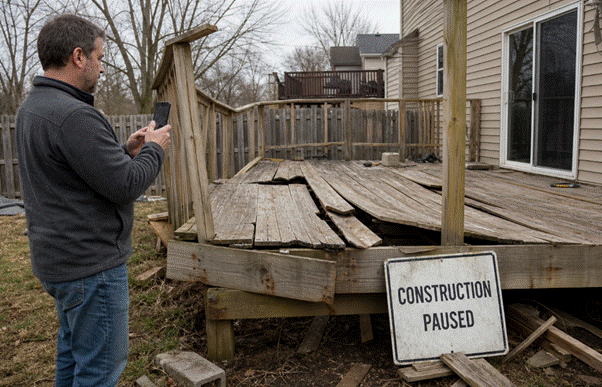
Getting burned by a bad contractor leaves more than an unfinished deck in your backyard. It leaves a knot in your stomach every time someone mentions “home improvement.” Maybe your last deck contractor took a deposit and vanished. Maybe the work was so sloppy the boards started warping within a year. Whatever happened, you’re probably staring at your options right now, feeling like every contractor is going to lie to you the same way. Here’s the thing, though: that fear, while completely understandable, doesn’t have to run the show. There’s a real, methodical way to hire someone again without repeating the same mistake, and it starts with understanding what actually went wrong the first time.
Why One Bad Contractor Doesn’t Mean Every Contractor Is Bad
One rough experience feels like proof that the whole industry is shady, but statistically, that’s just not how it works out. Most licensed deck contractors run small, local businesses that depend entirely on word of mouth and repeat clients, which means their reputation is basically their whole business model. The psychology of “fooled once, never again” is normal, and it’s actually a useful instinct when it keeps you cautious. The problem is when that instinct turns into paralysis, and you either overpay for excessive guarantees or avoid hiring anyone at all, leaving a half-finished deck to rot. The fix isn’t to trust blindly or trust no one. It’s to get specific about what failed last time and build your vetting process around exactly that.
First, Diagnose What Actually Went Wrong
Before you call a single new contractor, sit down and figure out precisely where the last project fell apart. Vague frustration like “they were terrible” doesn’t help you screen anyone. Specific failures do. Ask yourself which of these categories applies, because most bad deck jobs fail in one or more of these spots.
● Communication: Did they ghost you for weeks, or change plans without telling you?
● Workmanship: Are the boards uneven? Is the railing wobbly, are fasteners rusting already?
● Timeline: Did the project stretch three times longer than promised?
● Money: Did they overcharge, add surprise fees, or disappear with a deposit?
● Permits and inspections: did they skip permits entirely or fail an inspection nobody told you about?
Once you know the actual failure point, you can ask pointed questions to any new deck contractor who tests for that exact weakness. If the last guy vanished after the deposit, you’re going to ask very different questions than someone whose deck simply looked ugly.
Document Everything Before Moving Forward
Grab your phone and walk the entire deck, taking photos and short videos from every angle, including underneath if you can get down there safely. Capture soft spots, gaps, rust, anything that looks off, even if you’re not sure it matters. Then pull together every piece of paperwork from the last project: the original contract, any change orders, text messages, emails, and every payment receipt you have.
This isn’t just for your own peace of mind. A new contractor walking into a repair-after-failure situation needs this material to give you an honest quote. Without documentation, they’re guessing at scope, which means either a lowball estimate that balloons later or an inflated one padded for unknowns. Homeowners who show up organized get faster, more accurate assessments, plain and simple.
Red Flags to Watch for the Second Time Around
Here’s where it gets practical. Compare every new candidate against the specific failure pattern from before, not just a generic checklist you found online. That said, some warning signs matter no matter what went wrong last time.
|
Red Flag |
Why It Matters |
|
No license or won’t share license number |
Unlicensed work often isn’t covered if something fails |
|
Refuses to pull permits |
Skipping permits can void insurance and violate code |
|
Vague or verbal-only pricing |
No paper trail means no accountability later |
|
Pressure to sign same day |
Rushed decisions rarely end well |
|
No local project portfolio |
Can’t verify their actual work quality nearby |
|
Full deposit demanded upfront |
Legitimate contractors work in milestone payments |
If any of these overlap with what burned you before, that’s not a coincidence you should ignore. Trust the pattern.
Questions That Reveal Honesty, Not Just Skill
Skill is easy to fake with a nice looking website. Honesty shows up in how someone answers uncomfortable questions. Ask a candidate straight up: “Tell me about a project that didn’t go as planned.” A confident, honest contractor will actually describe something real, what happened, and what they changed afterward. Someone who deflects, gets defensive, or claims they’ve never had an issue in twenty years is either lying or hasn’t done enough work to have hit a snag, and neither is reassuring.
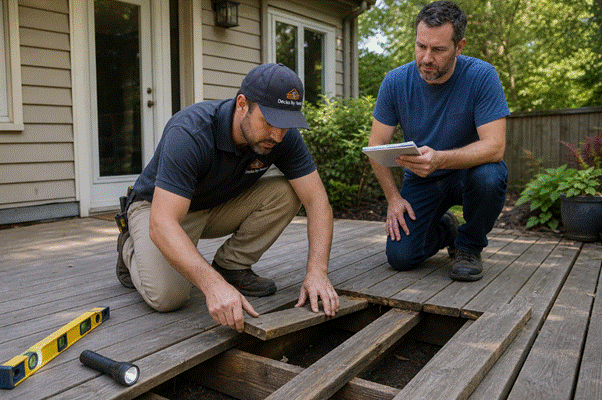
Ask specifically how they’d assess damage left behind by a previous contractor. A good answer involves a real inspection process, not a quick guess. And ask directly what happens if they find more problems mid-project than expected, do they call you first or just proceed and bill you later? Their answer to that single question tells you almost everything about how they’ll treat you going forward.
How a Trustworthy Contractor Handles a Repair-After-Failure Job
A repair-after-failure job is not the same as a fresh build, and a contractor worth hiring treats it that way. They’ll start with a full structural inspection, checking for hidden moisture damage, rotted ledger boards, compromised footings, and any fasteners that were installed the first time incorrectly. This isn’t a five-minute walk around; it usually involves pulling up a few boards or checking connections that aren’t visible from the surface.
From there, they should give you a written estimate that clearly separates repair costs from what a full rebuild would cost, so you can actually compare and decide. The best ones document what they find with before and after photos, so you’re not just taking their word for it that something was wrong. That transparency is the whole point. It’s the opposite of what got you into this situation the first time.
Rebuilding Your Confidence Step by Step
You don’t have to hand over full trust on day one, and honestly, you shouldn’t. Start small if the scope allows it, maybe agree to one phase of work first before committing to the whole project. Structure payments around milestones instead of paying everything upfront; a reasonable deposit followed by payments tied to completed stages protects you if anything goes sideways again.
Ask for regular check-ins, even quick photo updates every few days, so you’re not left wondering what’s happening on your own property. And make sure the contract spells out inspection and sign-off points before final payment changes hands. None of this is about being difficult. It’s just how a normal, professional deck contractor relationship should run, and if a candidate pushes back on any of it, that tells you something, too.
When to Consider Legal or Mediation Options for the Previous Contractor
While you’re vetting someone new, don’t forget the old contractor might still owe you something. If they were licensed, check whether your state has a contractor recovery fund or bonding claim process; many do. Filing a complaint with your local licensing board takes time, but it creates a paper trail that helps if you ever end up in small claims court. None of this needs to hold up your new project, though; run it as a separate track so a stalled dispute doesn’t leave your deck unfinished for another year.
Moving Forward With a Deck You Can Trust Again
Getting your deck rebuilt after a bad experience isn’t about finding someone who promises perfection; it’s about finding someone whose process holds up under scrutiny. A system built on documentation, clear questions, and staged trust protects you far better than gut feeling ever will. Take the time to vet properly, and the next deck contractor you hire can actually earn back the confidence the last one took away.